
AI engineering for B2B SaaS
Soatech builds AI features into your existing SaaS.
Turn documents into structured records and drafts your users can review — inside your product.
Embedded Architect: €7,500 per month, month to month, against a written scope.
Illustrative integration · sample data
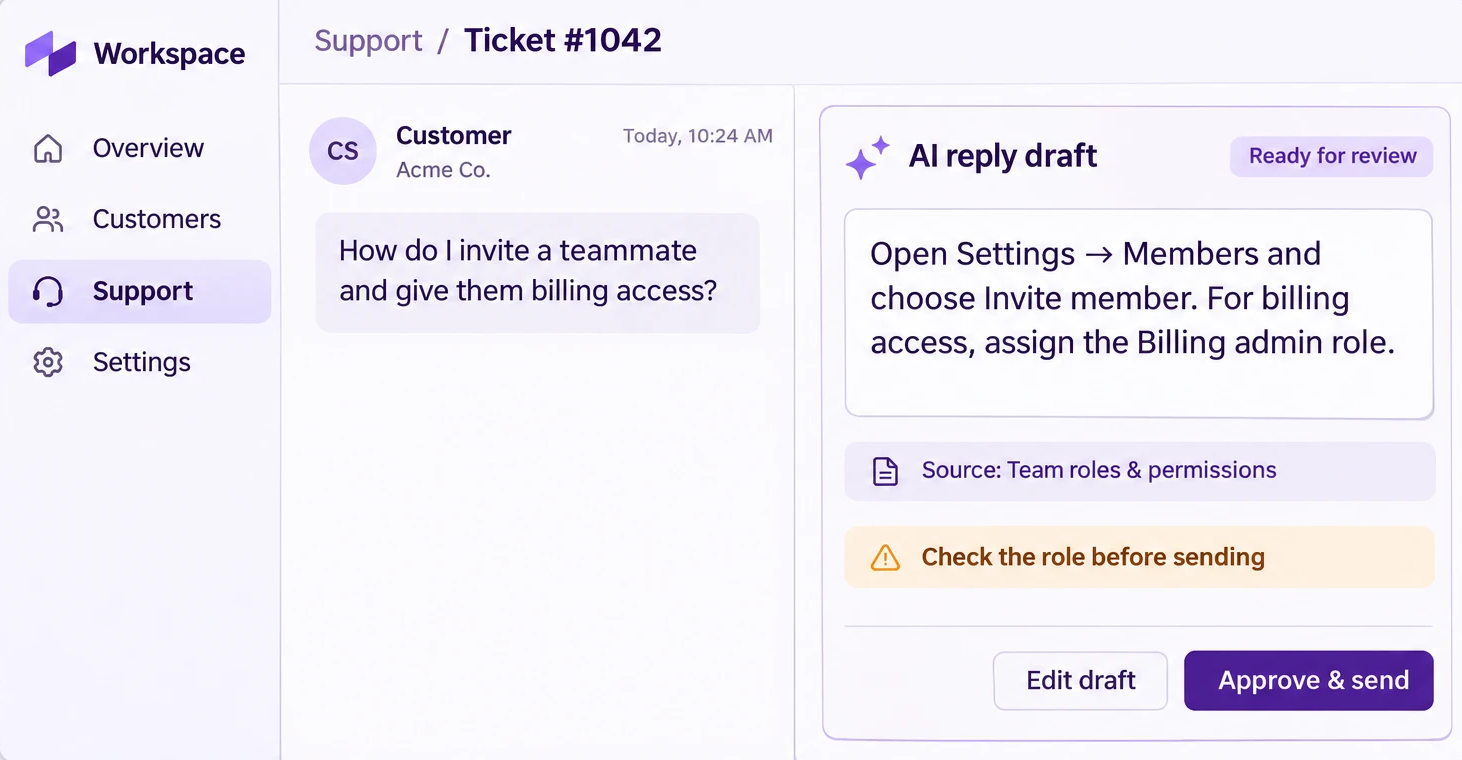
Example AI feature: support reply drafts
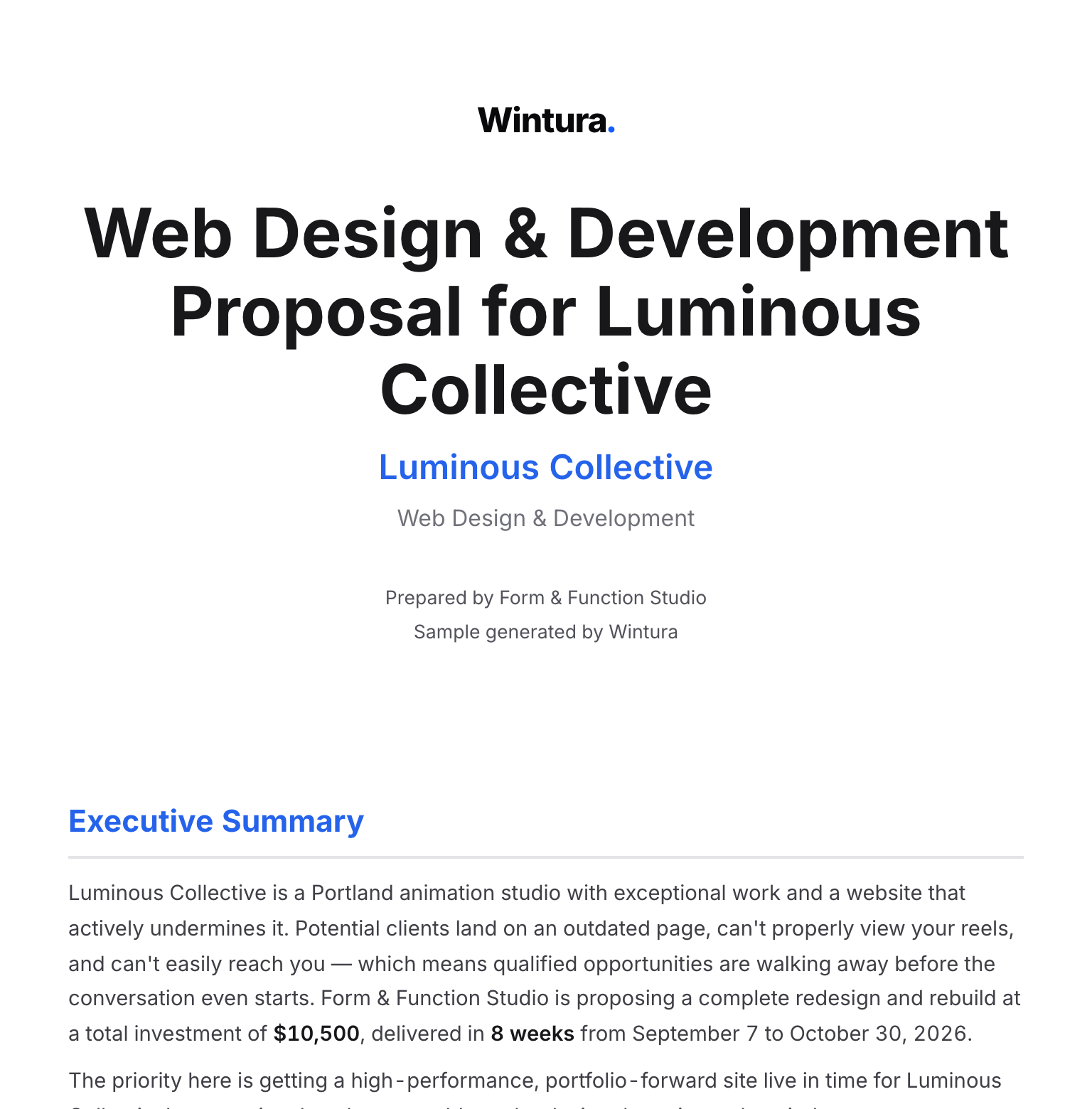
Wintura
Live at wintura.ai · built end to end by the founder · not client work
A client brief becomes a proposal, a statement of work and a staged invoice schedule. The interesting part is not the drafting — it is everything that makes a draft safe to price, send and sign.
 View full size
The same problems, in your product
- Turn unstructured input into structured records
- Briefs arrive as forwarded email, pasted Slack threads or PDFs. The analysis step asks for output in a fixed JSON schema and checks it field by field; a response that is cut off or does not parse falls back to a plan marked for manual review.
- Keep a person in control of risky output
- Commercial conflicts — a deadline the plan cannot meet, a price above the budget — are stored as review advisories for a person to resolve, instead of being written around in the text.
- Keep each customer’s data separate
- Every tenant-owned table carries the account it belongs to, and data-layer queries are scoped by it. Signed proposals are sealed: later edits are rejected and the signing record is hash-chained.
- Test the checks, not only the happy path
- The document quality gate has a self-test with planted defects — 137 assertions, 30 defect fixtures, 22 distinct checks. It shows the checks catch those fixtures; it is not a measure of extraction accuracy.
Each row describes behaviour verified in Wintura’s repository and live site on 7 November 2026 — the studio’s own product, not a client project.
How an engagement works
A senior architect works with your team in your repository, inside your data and permission rules and through your review and release process. It starts with a 30-minute scoping call; if there is a fit, a written scope and price follow.
You supply
Repository and environment access, a product decision maker and a named acceptance owner.
How work is accepted
A written scope with acceptance criteria before any work. Increments land weekly; your acceptance owner signs off against the criteria.
What you keep
The feature in your own codebase, tests for its permission and failure paths, and handover documentation.
Need a diagnosis first?
Production Audit — €1,500
A written diagnosis of one product or AI feature — for example an AI-built app before launch: what blocks a safe release, in priority order. 3–5 working days. No code changes.
Tell us about the AI feature you need to ship.
Book a 30-minute scoping call or write a few lines. On the call: your product, the feature and its constraints, and whether an engagement fits. If it does, a written scope and price follow by email.